THE UNIVERSITY of KANSAS
KU Biodiversity Institute and Natural History Museum
  • myKU
  • Email
  • Canvas
  • Enroll & Pay
  • Jayhawk GPS
Main navigation
  • Home
  • About Select to follow link
    • Overview
    • History
    • Mission & Values
    • Board of Advisors
    • Contact Us
  • Visit Select to follow link
    • Directions & Parking
    • Group Visits
    • Discovery Guides
    • Gift Shop
    • Collection Tours
    • Museum from Home
  • Exhibits Select to follow link
    • Bee Tree
    • Bugtown
    • Carboniferous Period: From Swamps to Shallow Seas
    • Cleared & Stained
    • Collections & Conservation
    • Comanche
    • Deep Scattering Layer
    • Documenting Diversity
    • Explore Evolution
    • Exploring Biodiversity
    • Faces of Parasites
    • Fossil Mammals from Turkey
    • Fossils
    • Grotesques
    • KU Paleo Up Close
    • Live Snakes & Anoles
    • Mammal Skulls
    • Microbes in the Museum
    • Mosasaur
    • Paleo Garden
    • Panorama
    • Silvisaurus
    • Spectrum of Red
  • Education & Outreach Select to follow link
    • KU Student and Faculty Programs
    • K-12 School Programs
    • Educator Resources
    • Scout Programs
    • Informal Science Education Dept.
  • News & Events Select to follow link
    • News
    • Events
    • Panorama Newsletter
    • Members Only Events
  • Research & Collections Select to follow link
    • Research
    • Collections
    • Research Laboratories
  • Research Divisions Select to follow link
    • Archaeology
    • Biodiversity Modeling
    • Botany
    • Data Management
    • Entomology
    • Herpetology
    • Ichthyology
    • Informatics
    • Invertebrate Paleontology
    • Invertebrate Zoology
    • Mammalogy
    • Ornithology
    • Paleobotany
    • Paleontological Institute
    • Phylogenetic Modeling
    • Symbiota
    • Vertebrate Paleontology
  • Support Select to follow link
    • Memberships
    • Give
    • Volunteer
  • Graduate Education
  • People
  • SPNHC 2025

Info for
  • Visitors
  • Educators
  • Graduate Education and Research
  • myKU
  • Email
  • Canvas
  • Enroll & Pay
  • Jayhawk GPS
THE UNIVERSITY of KANSAS
University of Kansas logo
KU Biodiversity Institute and Natural History Museum
Home
Visit

Museum from Home

Explore the KU Natural History Museum from home through a variety of fun and engaging games, educational activities, virtual events & more, or take a quick tour.
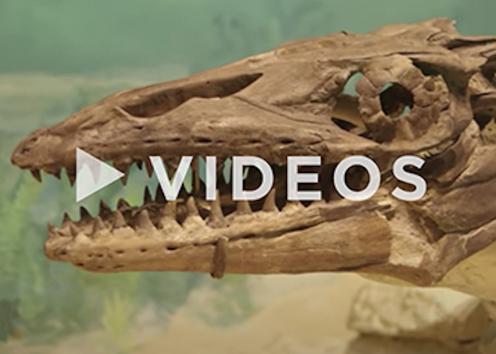
Long Mosasaur skull (marine reptile), with many sharp teeth. Text overlay "Videos", pointing to the museum's YouTube Channel

Explore Our Youtube Videos

Explore exhibits, try fun and educational activities, or follow an expedition for fossils, snakes, insects and more.

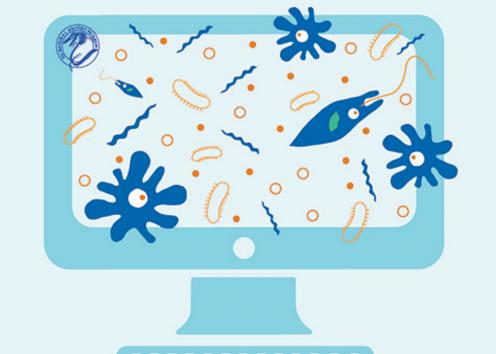
illustration of a computer in light blue with a screen full of microbes and amoebas

Virtual Microbes on the Move

Explore microbial life with a virtual version of our Microbes on the Move National Science Foundation EPSCoR-funded project.

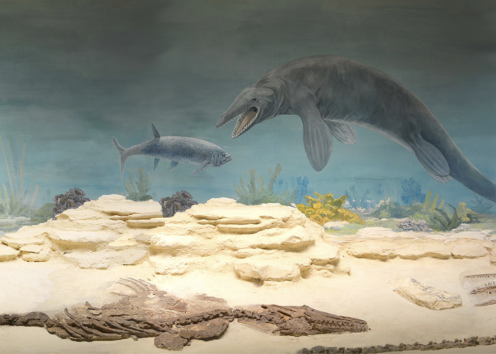
Extinct Marine Reptile exhibit with fossils in front and illustration in back

Virtual Pop-Up Paleontology

Explore paleontology with a virtual version of our donor-funded Pop-Up Paleontology program.

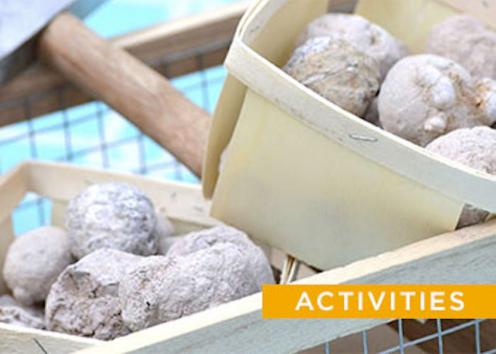
rocks in small bins

Explore Geology

Learn about geology by making your own mineral detection kit, test fizzy fossils or make rock candy crystals which you can eat!

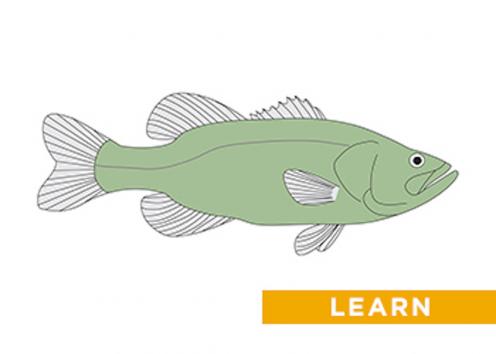
illustration of a fish, in profile. It's green and has two fins on top, one on the bottom, two on the side and one large fin on its tail.

Fish Eye View - Tree of Live

Use this online module to explore fish: what makes them fish, important features, their relationships, and evolutionary innovations.

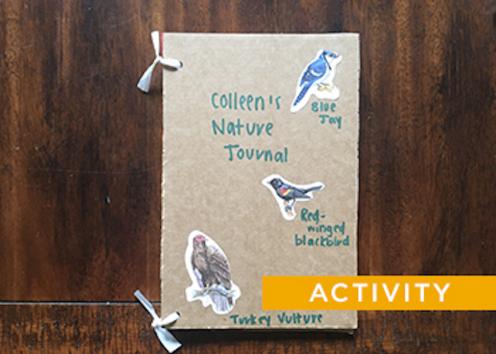
A simple nature journal made from cardboard, tied in two placed on the left with twist ties, with handwriting and stickers of birds on it

Make a Nature Journal (PDF)

Nature or field journals help scientists study in the field. Create a journal and record your own observations!

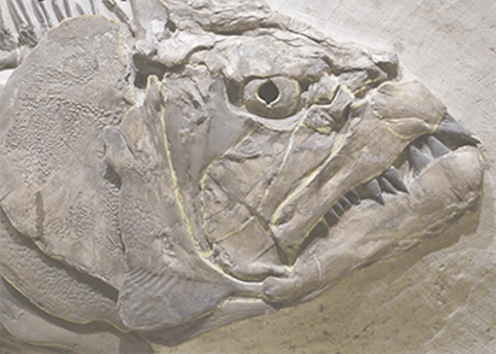
Close up of the head of a very grumpy looking fish fossil with a downturned mouth which is filled with sharo teeth. This is a Xiphanctinus (Portheus) Molossus fossil

Digital Encyclopedia of Ancient Life

Explore this free guide about fossils and the history of life on Earth, or get the free Digital Atlas app on your phone.

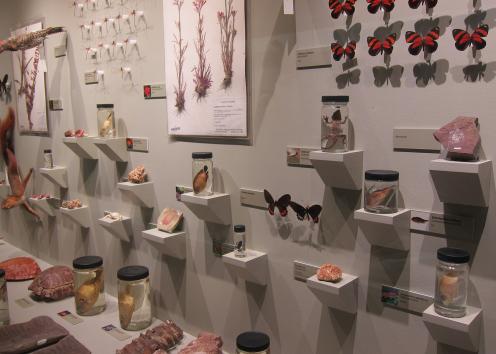
Many different biological specimens, all in naturally-occuring shades of red, with rows of deep orange butterflied at top right, pink pressed flowering plants at top center and different jars of frogs, lizards and other specimens on small shelves. Photo from the museum's Exhibit of Red

Explore Exhibits

Explore our museum exhibits, many which have virtual activities you can do at home!

The Tree Room graphic loosely representing genetic family trees, with (across the top) a microbe, a mouse, a butterfly and a leaf

The Tree Room

Check out the Primer, Field Guide to Evolutionary Trees, and For Teachers sections to learn how we communicate about evolutionary relationships.

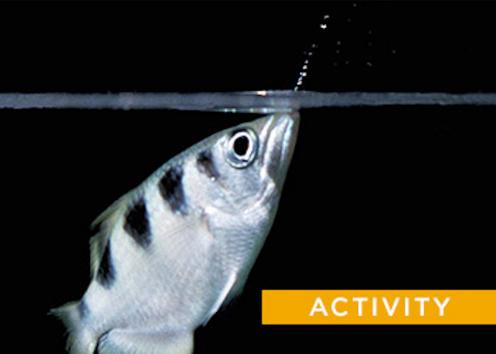
photo of an archerfish, silver with black patches on top, swimming just below the water's surface and shooting a little water from its mouth, above the water line

Spit Like an Archerfish (PDF)

Archerfishes knock insects and other prey off of branches by spitting water at them. Use a squirt toy or squeeze bottle to test your skills.

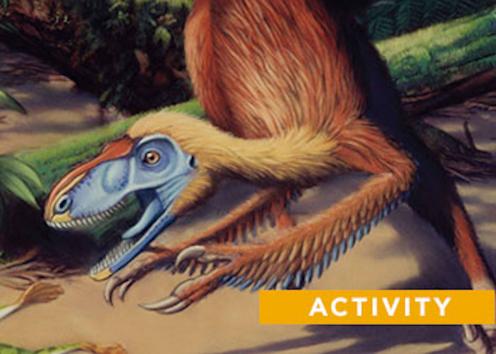
illustration of a prehistoric bird-like animal with its mouth open, showing lots of small teeth. It has two arms that are just barely covered with feathers.

Explore Adaptations

Investigate adaptations in vertebrate hands by making and using models of Bambiraptor, chameleons, and aye-ayes.

iNaturalist logo with a green bird in flight, with text iNaturalist under it.

Join Our iNaturalist Project!

Help us document the natural world by joining our latest citizen science project using the free iNaturalist app!

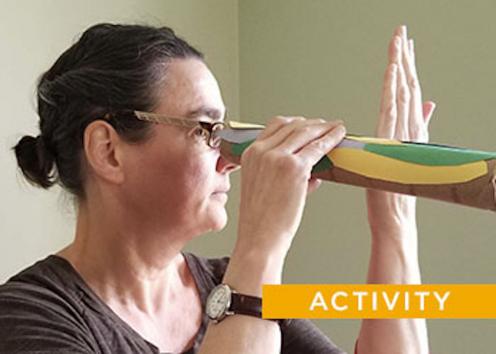
Woman looking through a paper tube with one eye and holding her left hand up flat, palm facing her

Body Tricks (PDF)

Use your body, and few other objects such as a wall, to explore how your vision, senses and muscles work.

A cartoon-like space ship with three characters inside, blue, red and green. The 'license plate' says Proton. Underneath, in big puffy purple letters, it says Quarked!

Quarked

Play games, watch videos and more with this educational site created by physicists, museum educators, designers and others at KU.

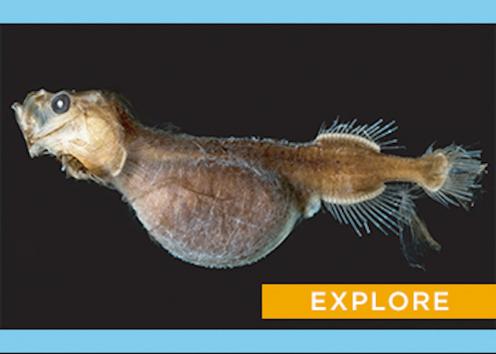
An usual sea creature that looks like a fish on its tail. It is skinny except for a pronounced, protruding belly. it's face has an eye but it's difficult to discern other features.

Investigate a Deep Sea Mystery

Unravel the mystery of deep-sea fishes by analyzing data to test alternative hypotheses about evolutionary relationships in this high school level activity.
KU The University of Kansas KU The University of Kansas
Dyche Hall
1345 Jayhawk Blvd
Lawrence, KS 66045
biodiversity@ku.edu
785-864-4450
facebook instagram twitter youtube linkedin


  • Support the Museum
  • KU Office of Research
  • KU Paleontological Institute
  • Visit KU
  • KU Admissions
  • KU Endowment
  • KU News
  • KU Events
  • KU Careers
  • KU Alumni Association

Nondiscrimination statement

Accessibility| Website support| CMS login
KU degree stats logo KU degree stats img

© 2025 The University of Kansas

The University of Kansas prohibits discrimination on the basis of race, color, ethnicity, religion, sex, national origin, age, ancestry, disability, status as a veteran, sexual orientation, marital status, parental status, gender identity, gender expression, and genetic information in the university's programs and activities. Retaliation is also prohibited by university policy. The following person has been designated to handle inquiries regarding the nondiscrimination policies and procedures and is the Title IX Coordinator for all KU and KUMC campuses: Associate Vice Chancellor for the Office of Civil Rights and Title IX, civilrights@ku.edu, Room 1082, Dole Human Development Center, 1000 Sunnyside Avenue, Lawrence, KS 66045, 785-864-6414, 711 TTY. Reports can be submitted by contacting the Title IX Coordinator as provided herein or using the Title IX online report form and complaints can be submitted with the Title IX Coordinator or using the Title IX online complaint form.

The University of Kansas is a public institution governed by the Kansas Board of Regents.